- All
- Product Name
- Product Keyword
- Product Model
- Product Summary
- Product Description
- Multi Field Search

Author: Site Editor Publish Time: 2025-12-26 Origin: Site


Core Function
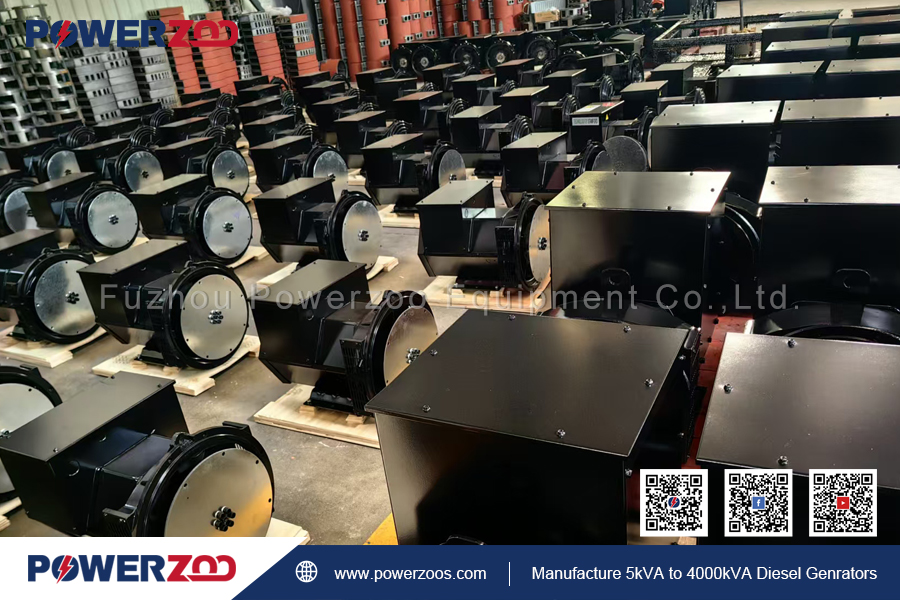
Converts mechanical energy (rotational power) into AC electrical energy. It is the final component in a generator set that performs the “power generation” function.
How It Works
Power Source: An engine (usually diesel, gasoline, or gas) burns fuel to produce rotational power.
Power Transfer: The engine's output shaft directly drives the alternator's rotor via a coupling.
Magnetic Field Generation:
A small exciter (a small generator) or permanent magnets create an initial AC current.
This AC current is rectified into DC under the control of an Automatic Voltage Regulator (AVR) and sent to the rotor windings, producing a strong, controllable magnetic field.
Electromagnetic Induction:
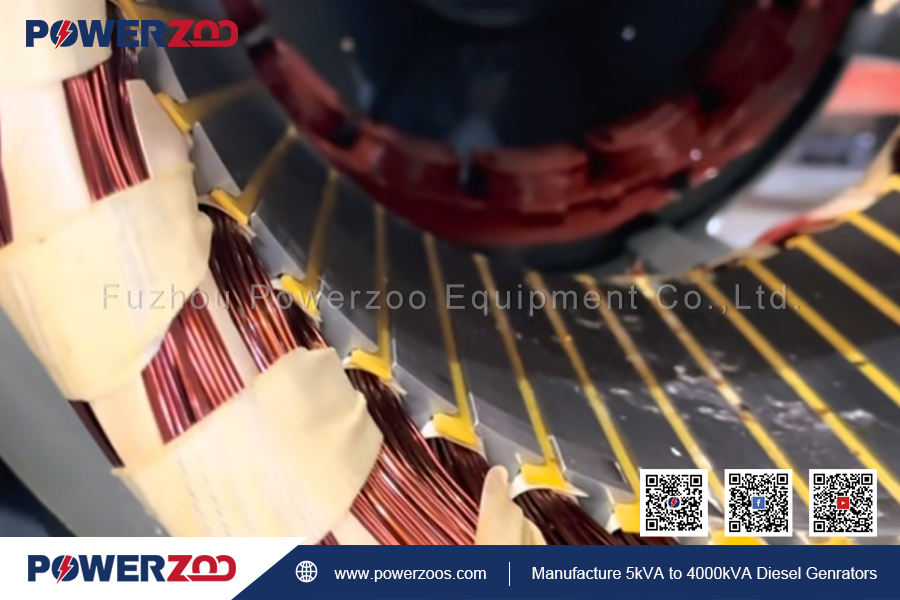
The alternator spins the magnetic rotor inside the stator (which contains three sets of copper windings).
According to Faraday’s Law, the rotating magnetic field induces an alternating voltage in the stator windings.
Power Output: The three-phase (or single-phase) AC electricity from the stator is delivered through output terminals to external devices.
Voltage Stabilization: The AVR constantly monitors output voltage. If the load changes cause voltage fluctuations, the AVR adjusts the DC current to the rotor, changing the magnetic field strength to keep output voltage stable (e.g., at 380V/220V).
Key Components
Rotor: Rotating part that carries the field windings, creating a rotating magnetic field.
Stator: Stationary part made of an iron core and windings, where electricity is generated.
Excitation System: Includes the exciter, AVR, and rectifier to provide and control the rotor’s magnetic field.
Cooling System: Fan and vents to prevent overheating.
Bearings: Support smooth rotor rotation.
Importance
Final Energy Conversion: Without the alternator, the engine is only a prime mover and cannot produce electricity.
Determines Power Quality: Its design and manufacturing quality directly affect voltage stability, frequency accuracy, and waveform purity (low distortion). High-quality alternators are crucial for sensitive electronics.
Affects Reliability & Lifespan: As a precision electrical component, its insulation and protection ratings determine reliability in harsh conditions.
Handles Varying Loads: A good excitation system and AVR allow the generator to handle sudden load changes and quickly restore stable voltage.


